Artifacts
The Silent Guardian
The Kura stood apart from the main house, its clay walls thick enough to survive fire, flood, and a century of snow. What was placed inside was meant to last.
Most of it did.
Artifacts of Omoya & Kura
Every object here was already in the house. Nothing was collected or curated. These are what remained.
Section 1
The Omoya — The Intellectual & Living Center
Tatami, irori, shoji. The iron kettle, the manuscripts, the Shinto scripts, the family photographs. This was where daily life happened — and where knowledge, ceremony, and memory accumulated over generations.
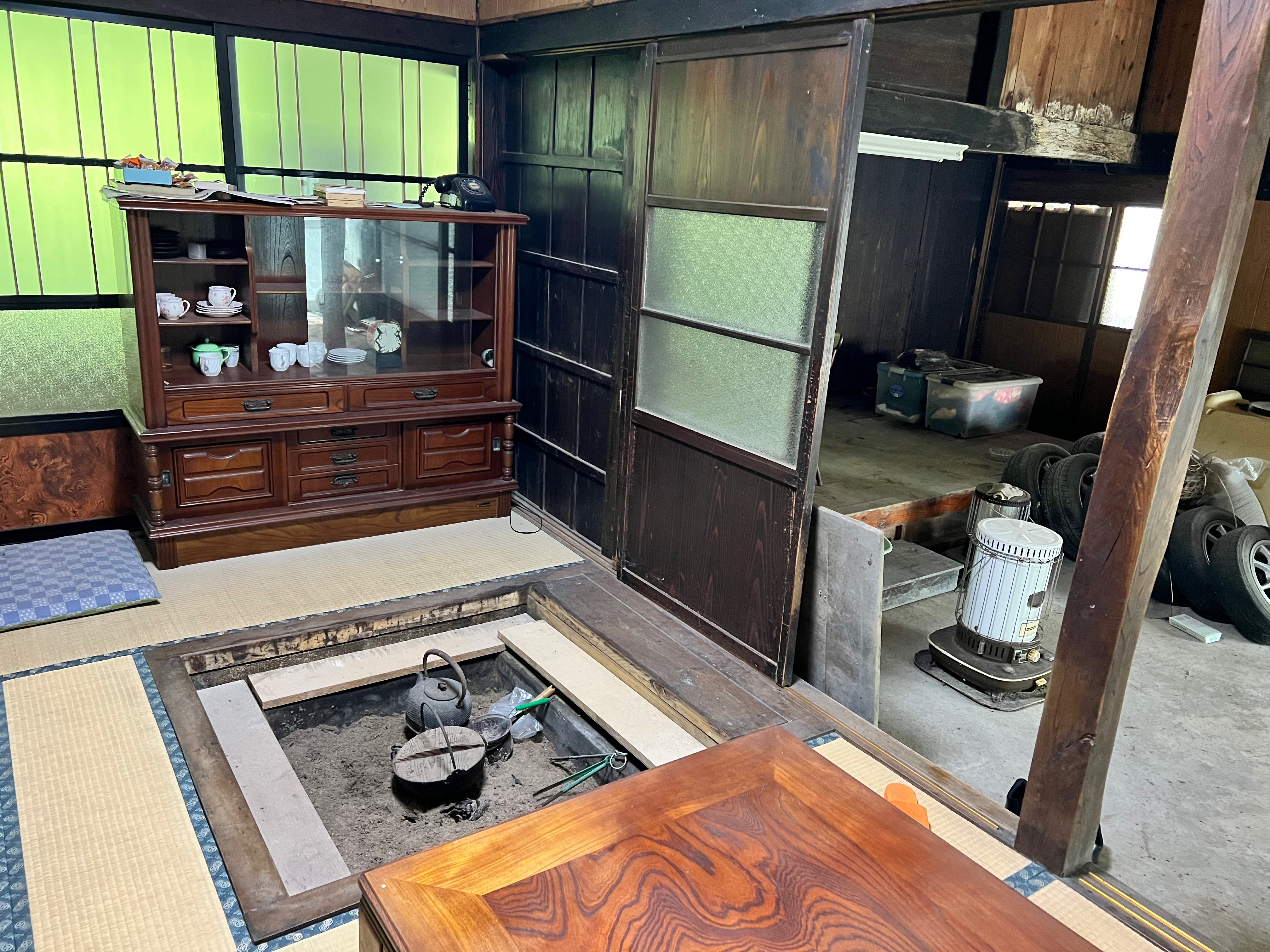
Omoya 01 — Iron kettle over the irori. The hearth of the main house, still warm in memory.
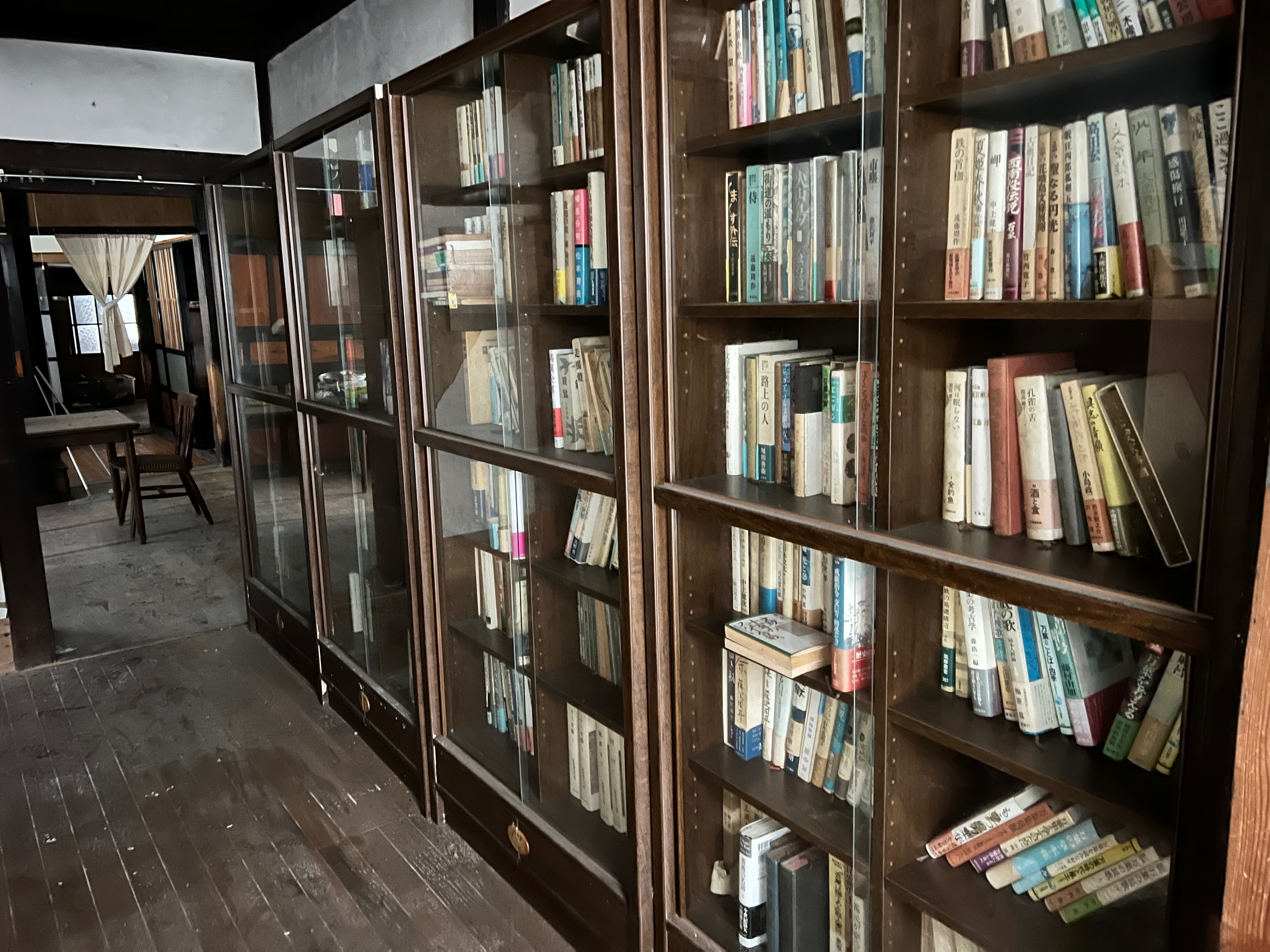
Omoya 02 — The Study Room — A library located behind the main room. Showa-era publications and general literature, documenting a century of modern intellectual history.
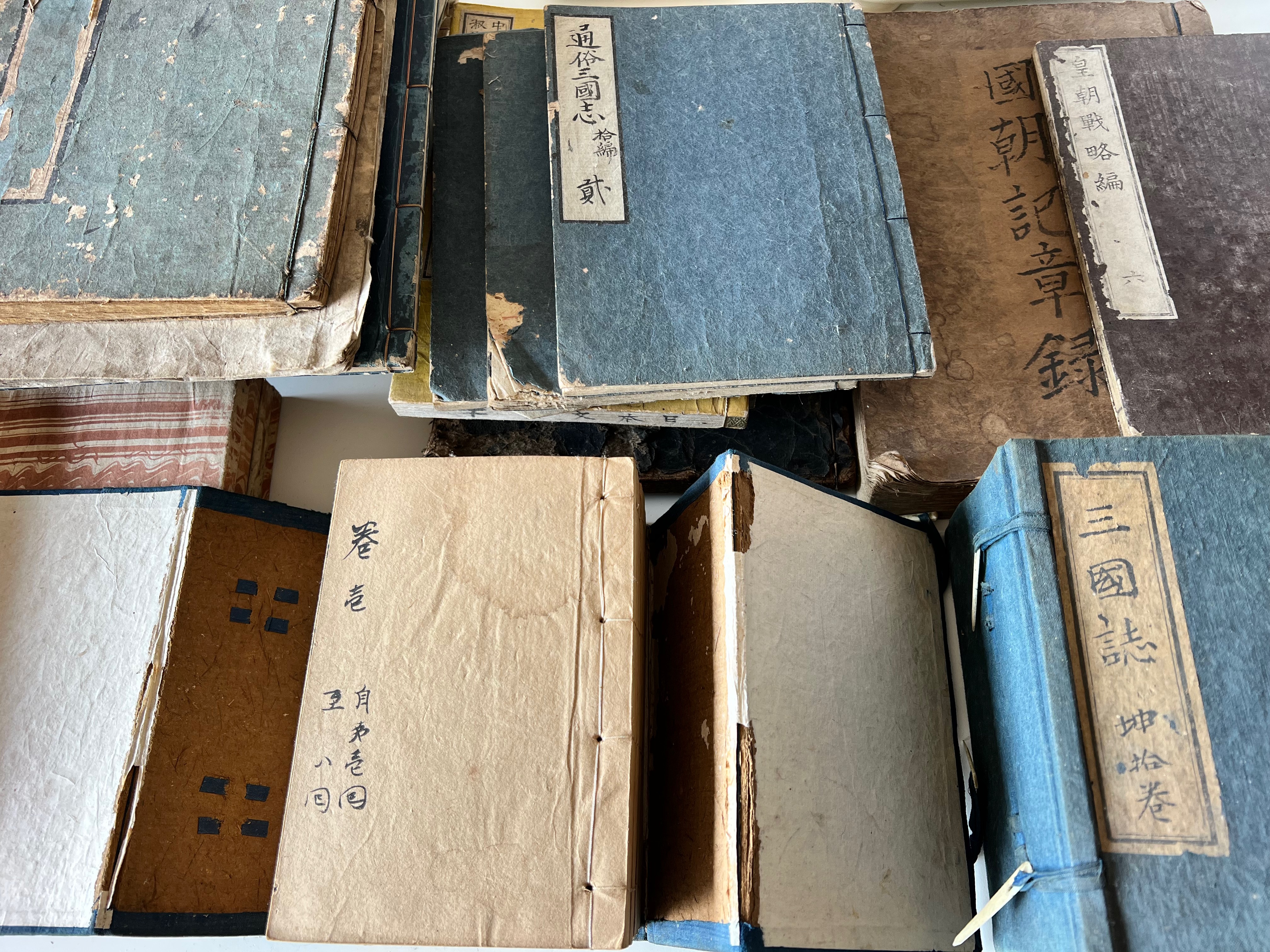
Omoya 03 — A learned hand. The writing of someone who taught.
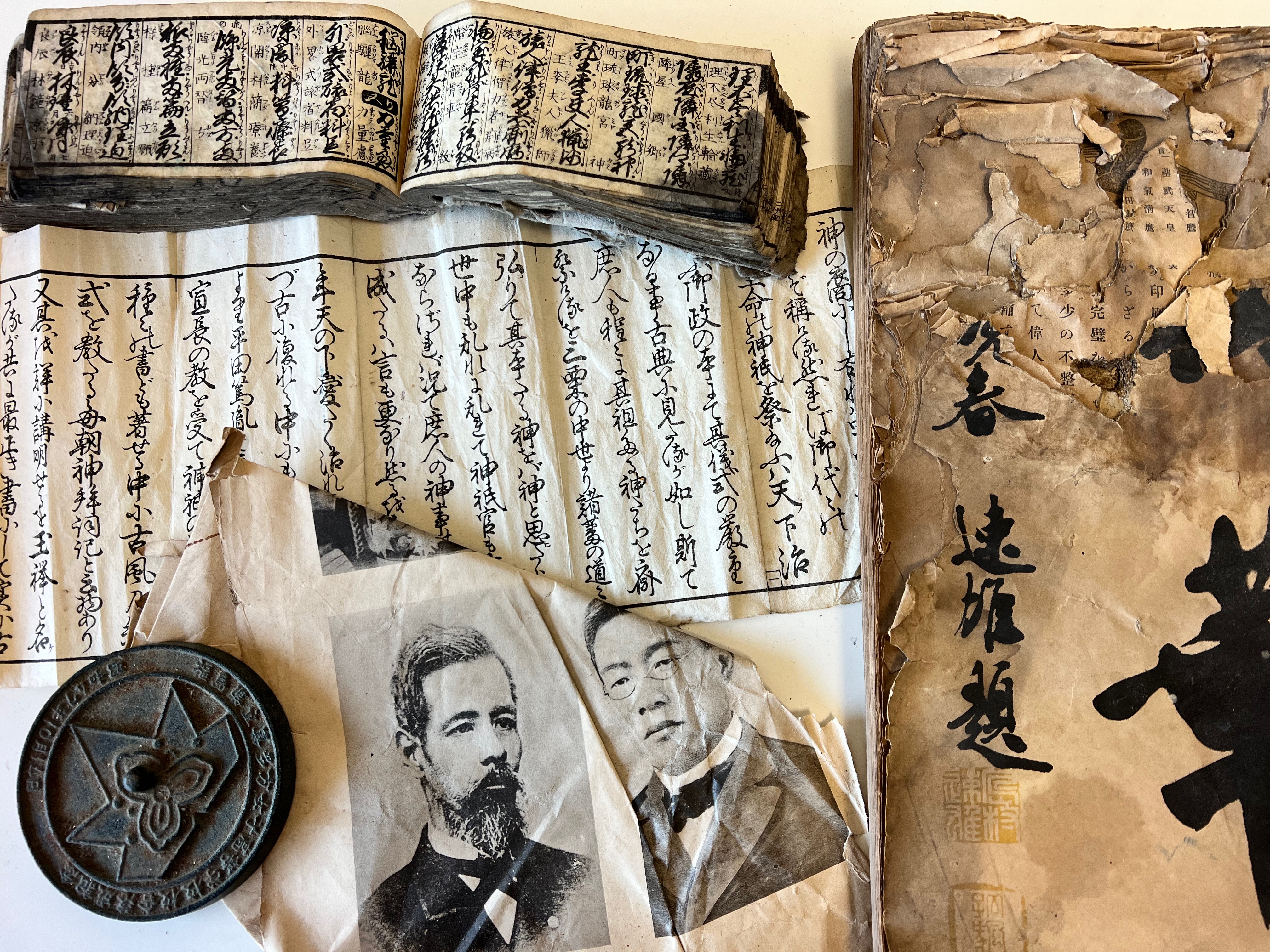
Omoya 04 — Pages worn thin by use. Knowledge passed forward.
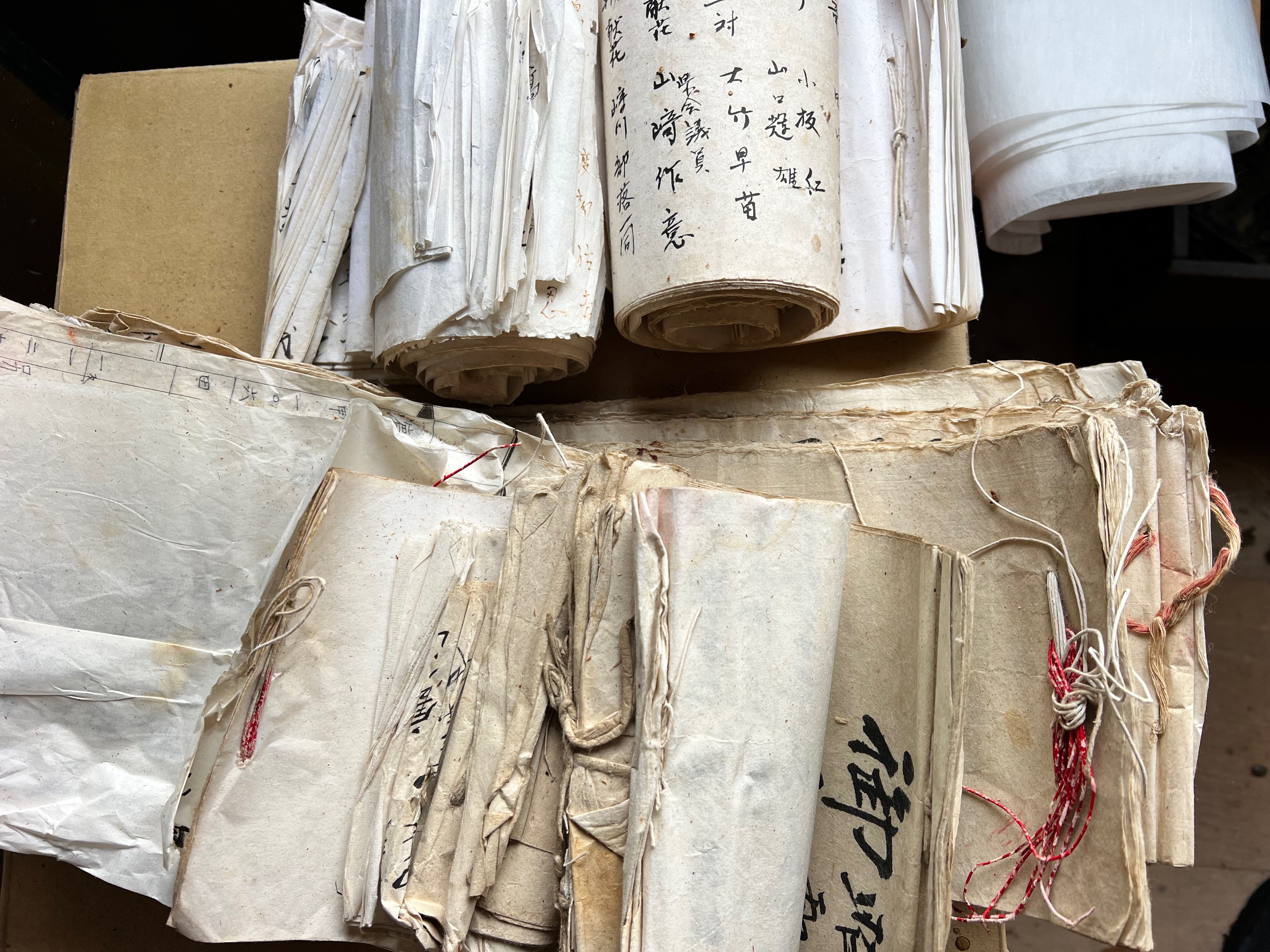
Omoya 05 — Text and tradition, inseparable in this household.
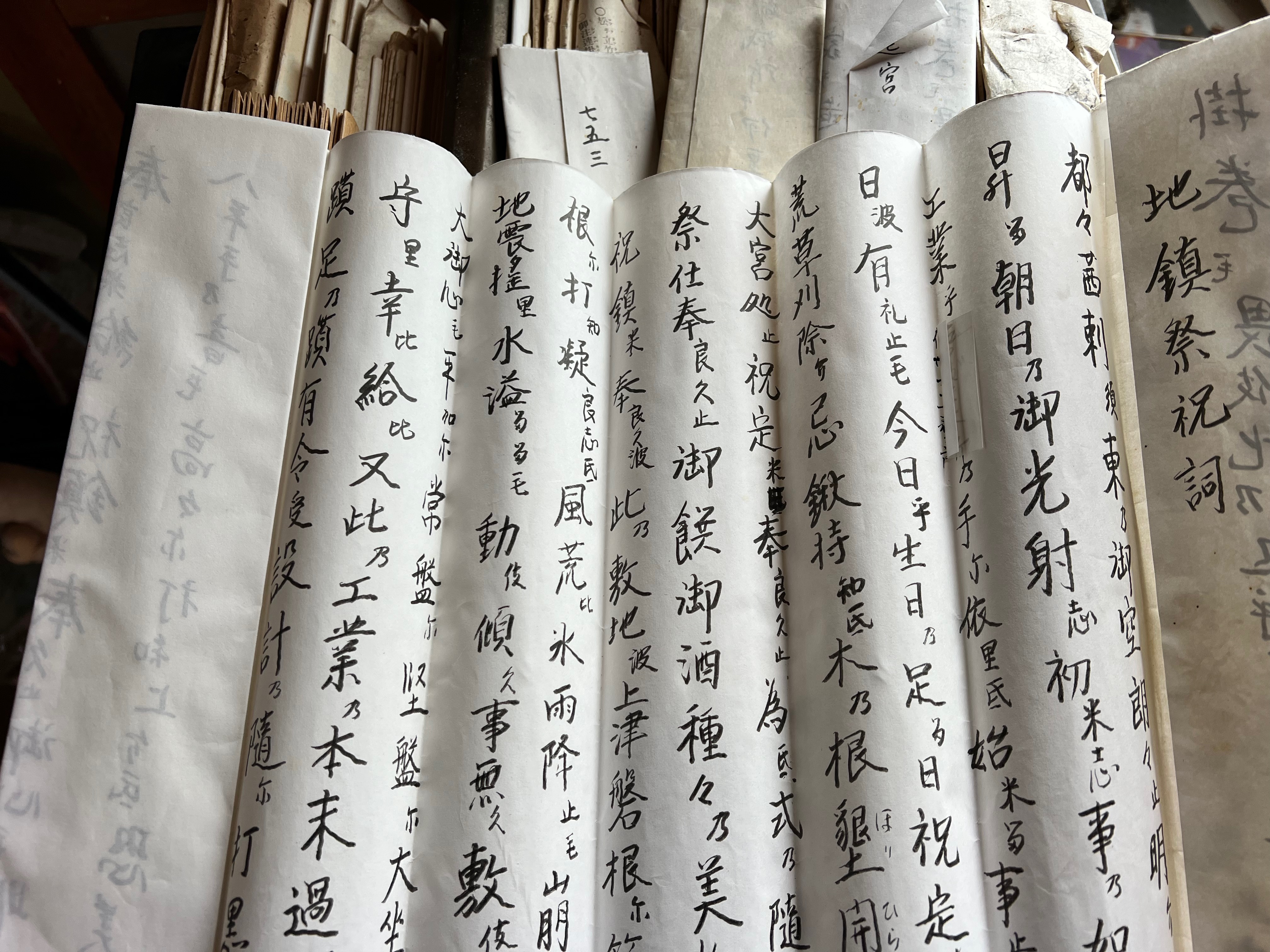
Omoya 06 — Shinto scripts. The solemn prayers offered to the village, in his own hand.
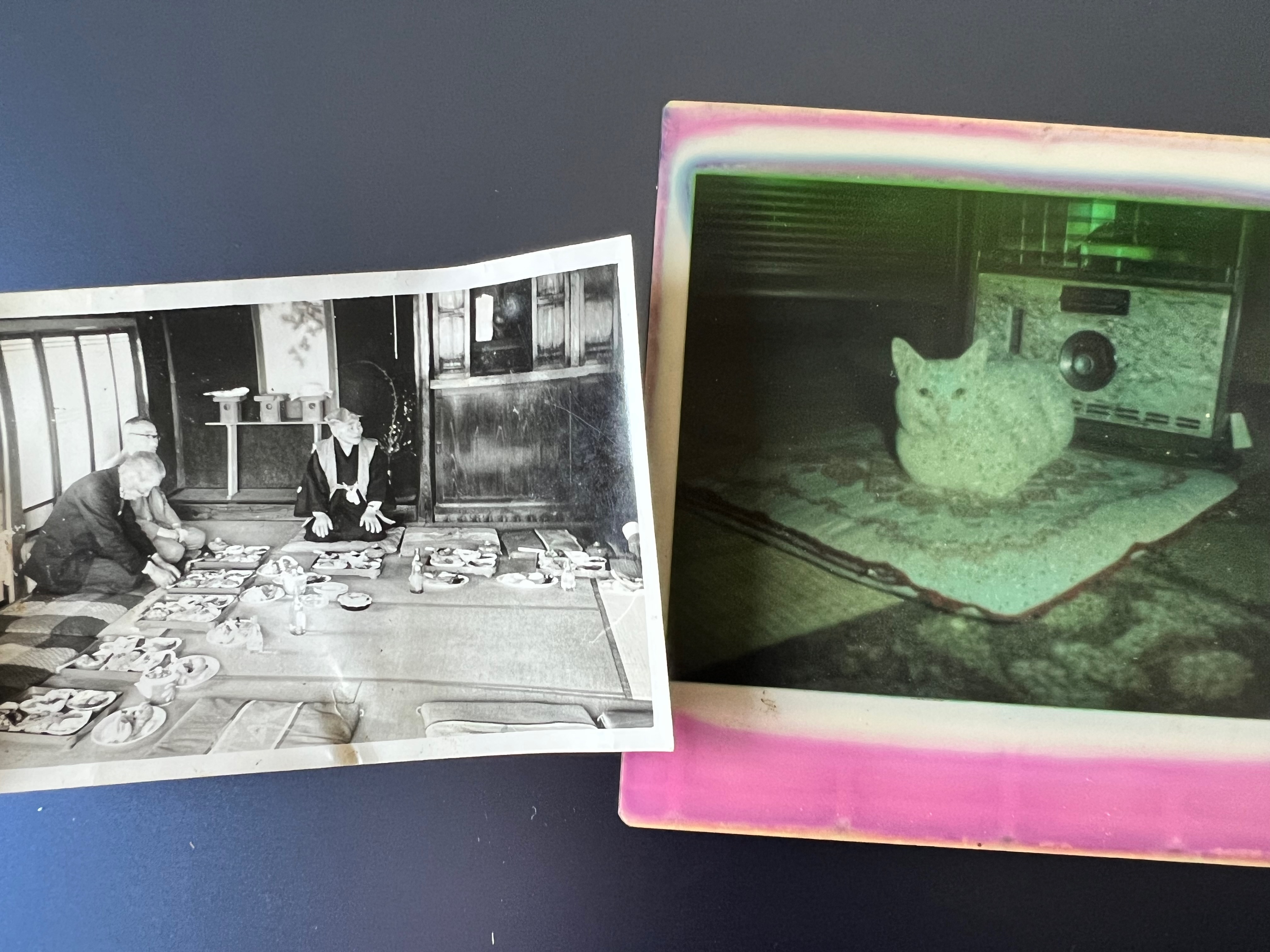
Omoya 07 — A long-life feast. The house alive with the weight of celebration.
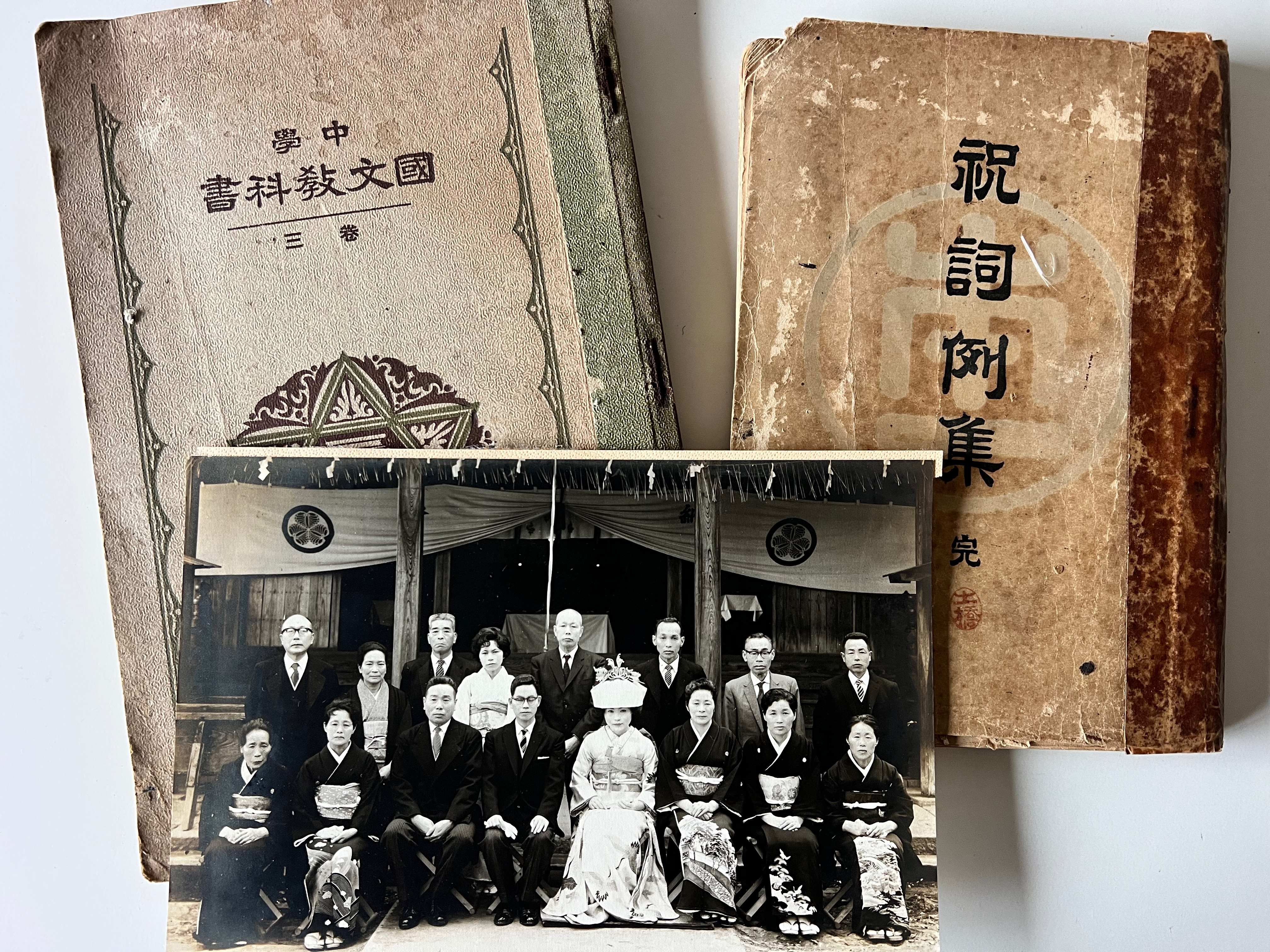
Omoya 08 — A wedding photograph. The ritual and the tenderness, held together.
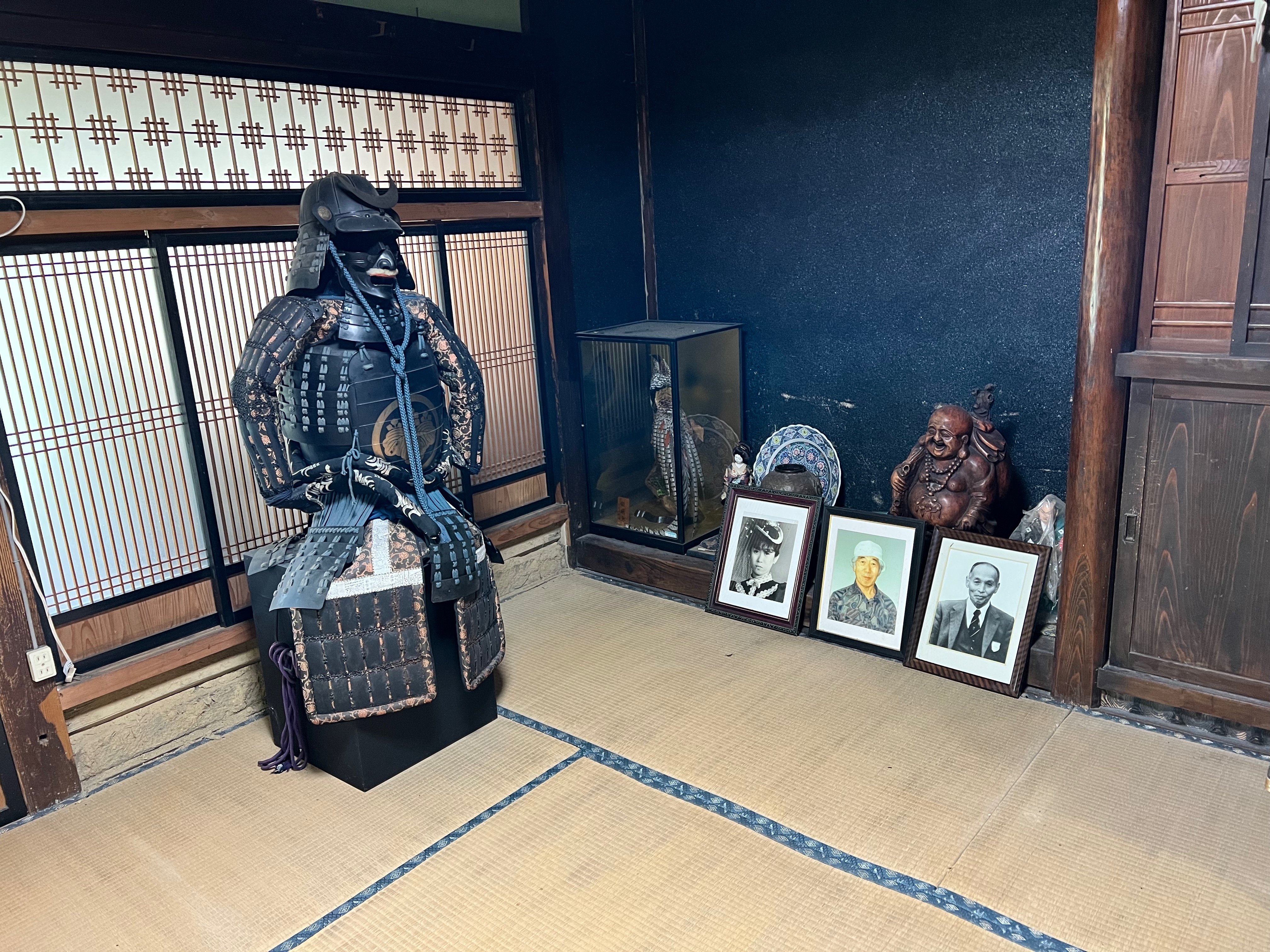
Omoya 09 — A photograph of armor. The face has gone; the pride of the house remains.
Section 2
The Kura — The Silent Repository
No tatami. No hearth. Earthen floor, thick walls, darkness. Things placed here were not for daily use — they were being kept. Chests, barrels, sealed boxes, a soldier's pocketbook. The weight of a life set aside.
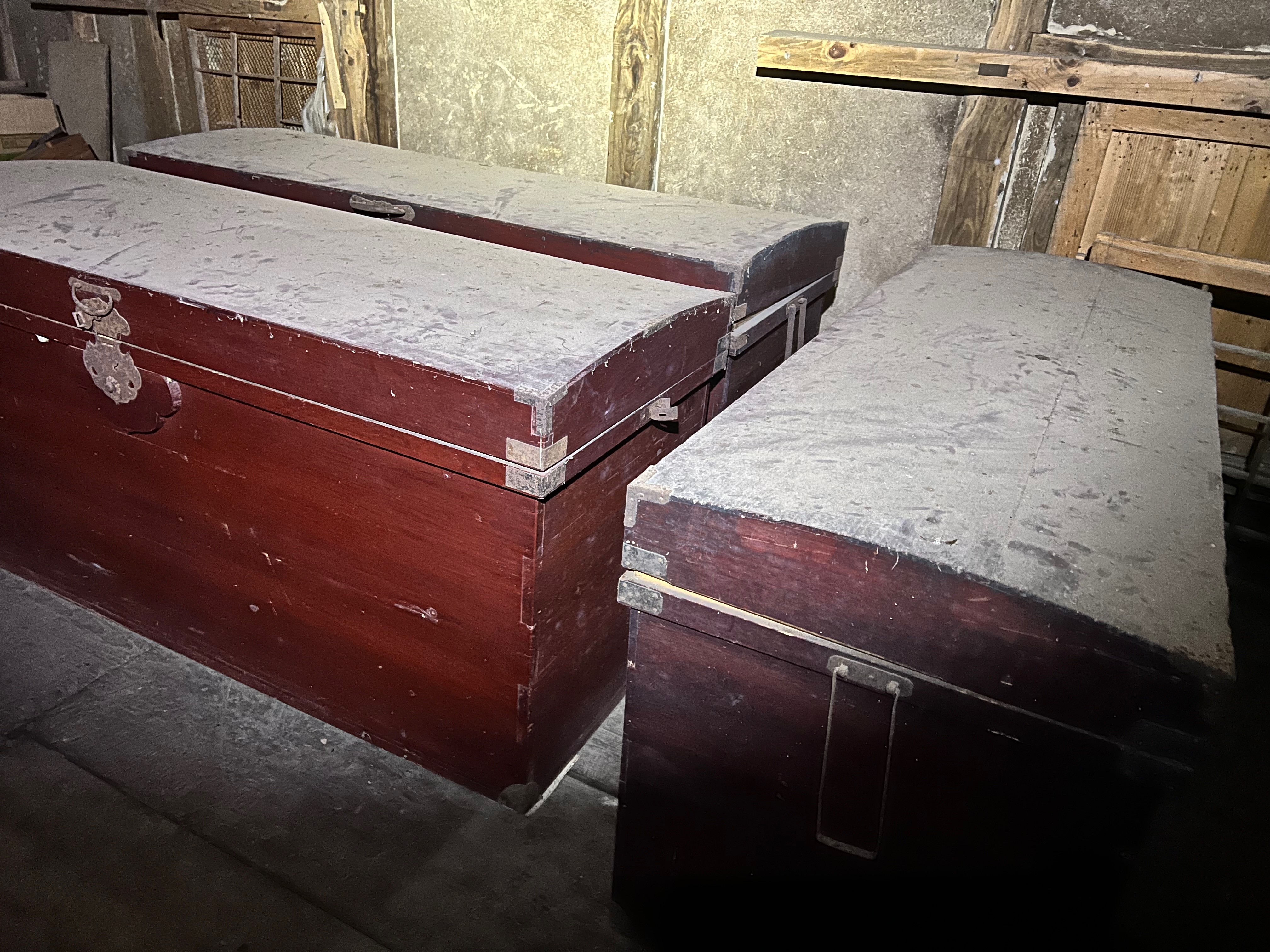
Kura 01 — Nagamochi chest. Sealed, dusty, patient on the earthen floor.
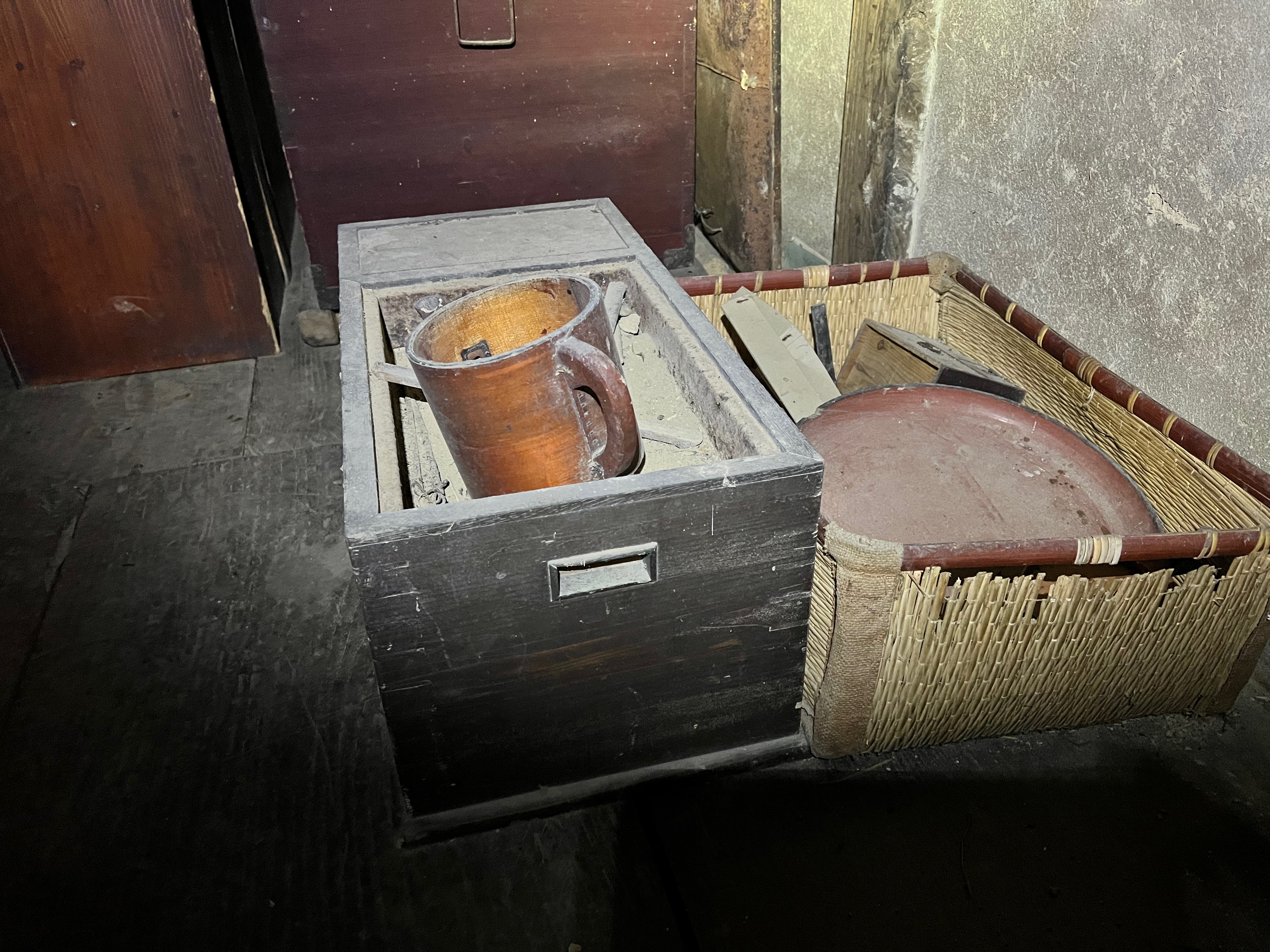
Kura 02 — Lacquered hibachi. A vessel of warmth, now at rest in the cold of the kura.
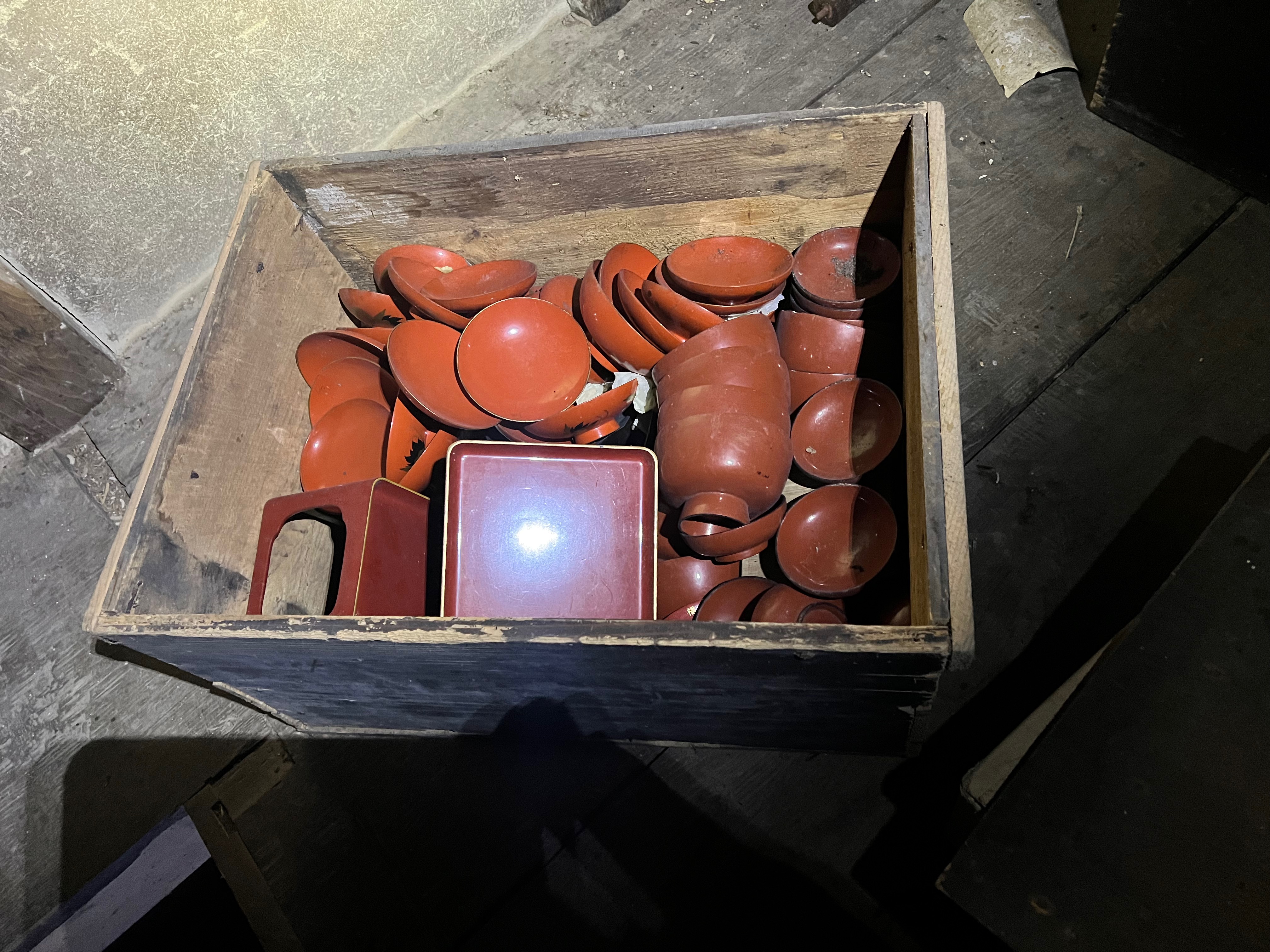
Kura 03 — Sake cup. Raised once. Then stored. The ceremony has passed.
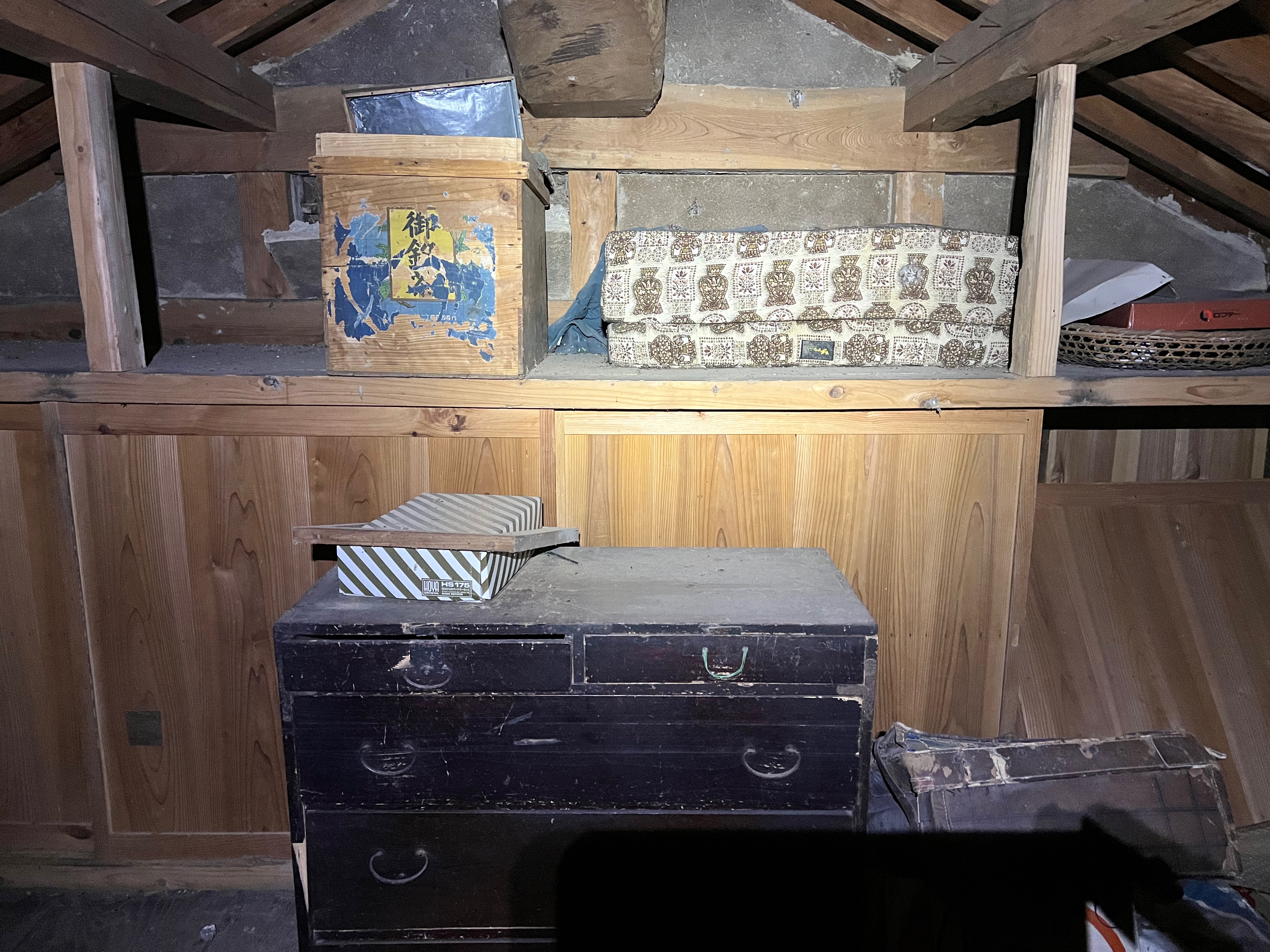
Kura 04 — Small tansu. Each drawer a small archive, set aside.
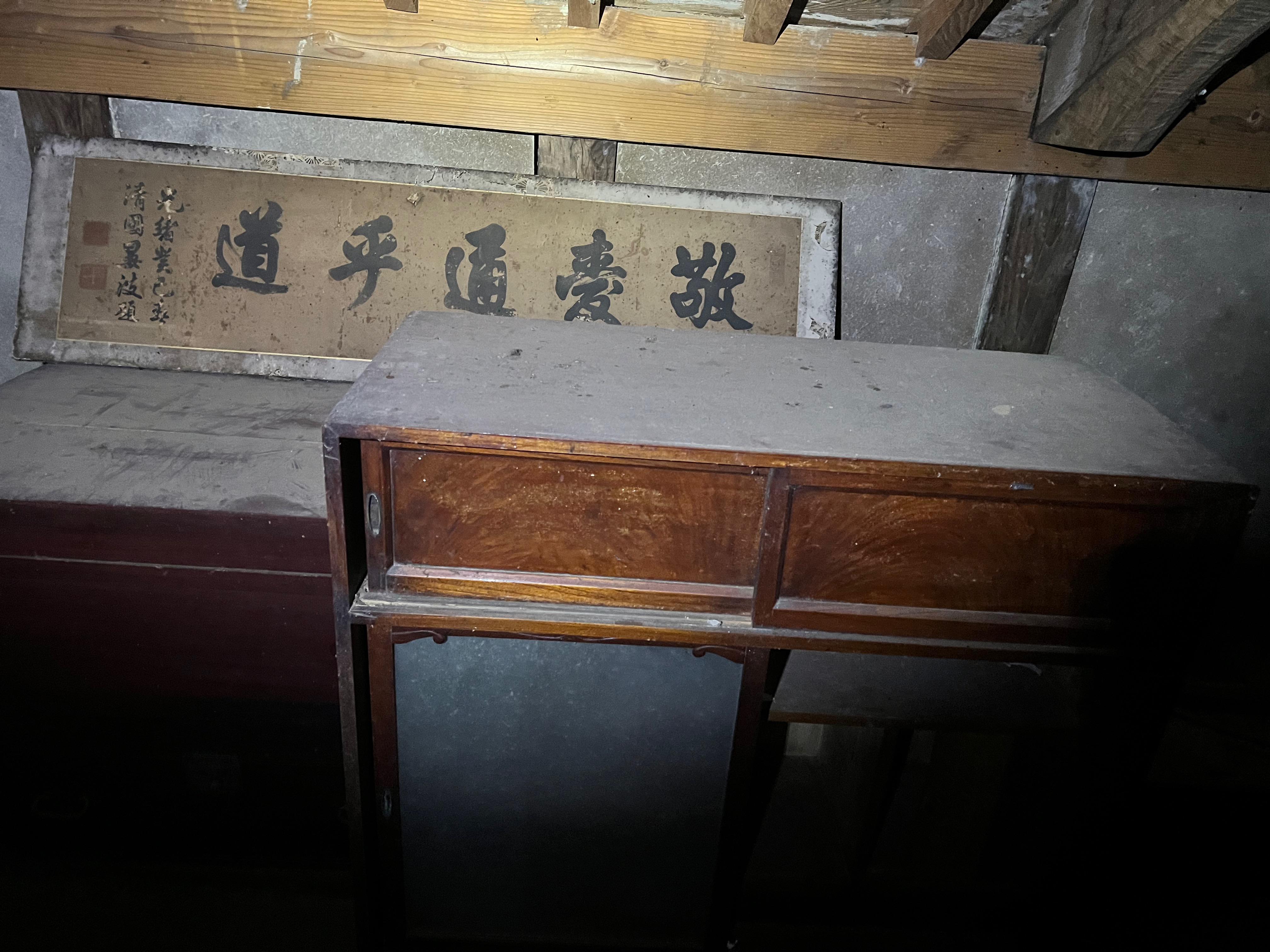
Kura 05 — Tansu chest. Lacquer worn to bare wood by the weight of time.
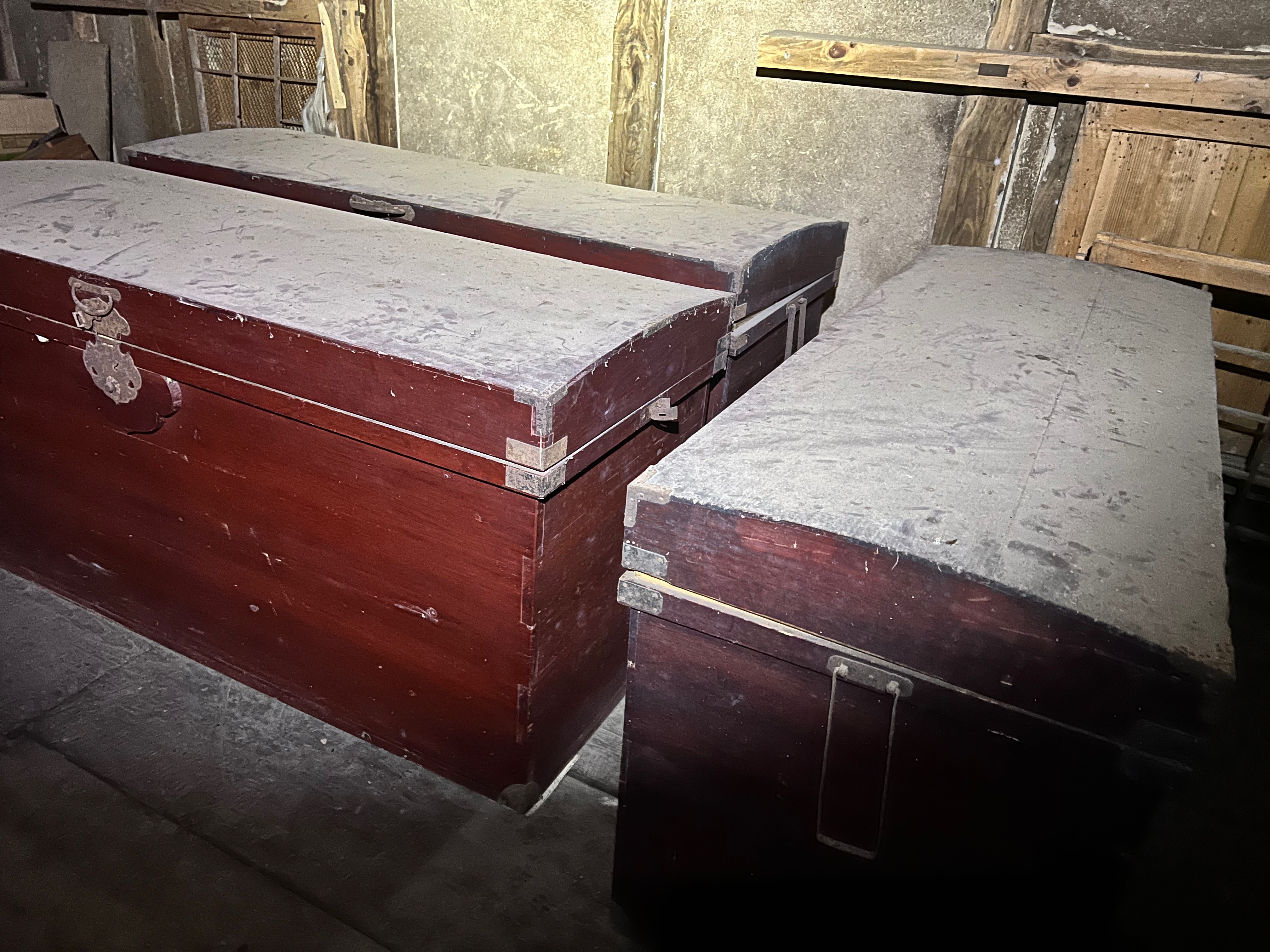
Kura 06 — A preservation box. Contents undisturbed, sealed against the years.
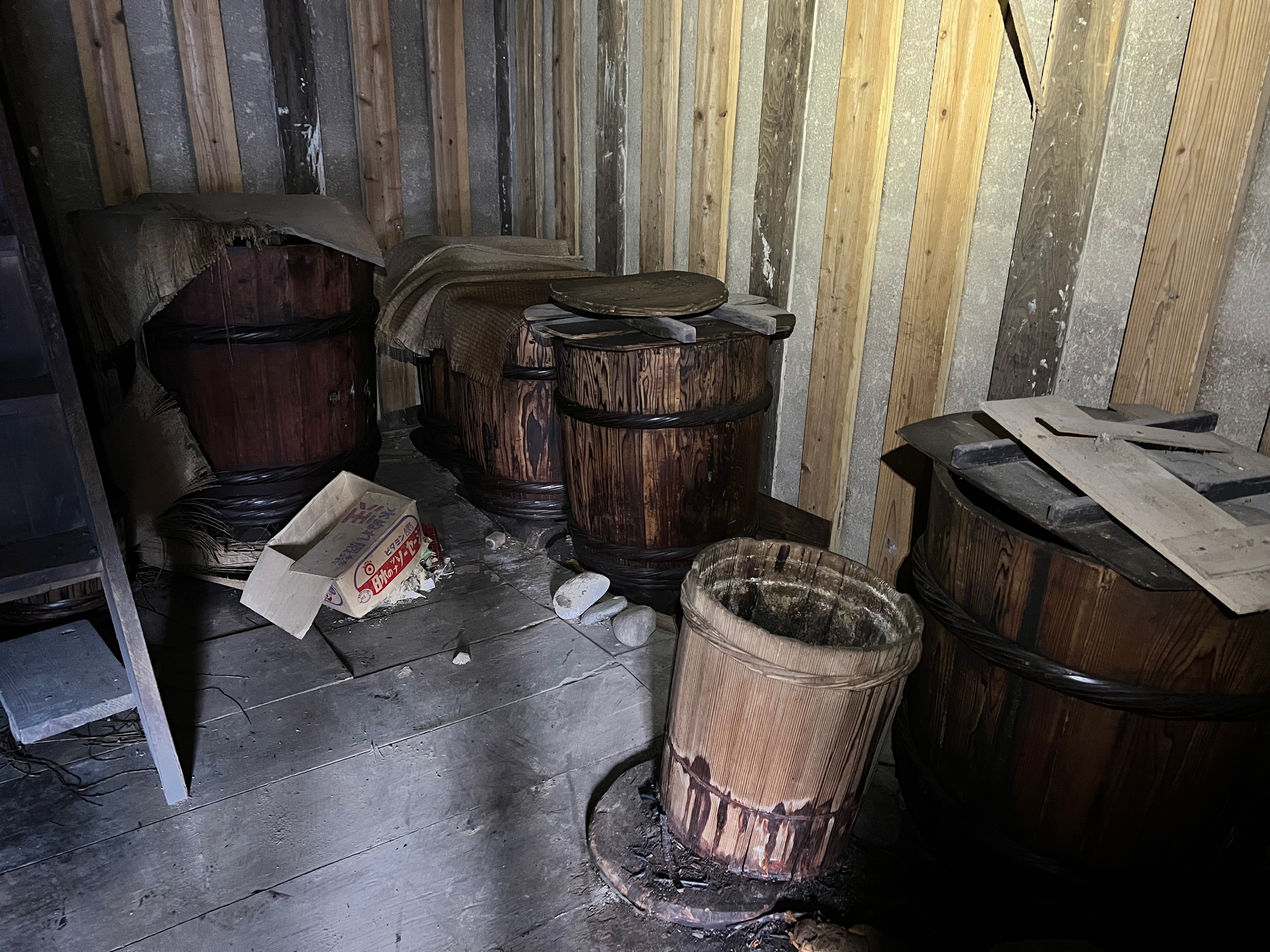
Kura 07 — Miso barrel. A year's patience, compressed into clay and silence.
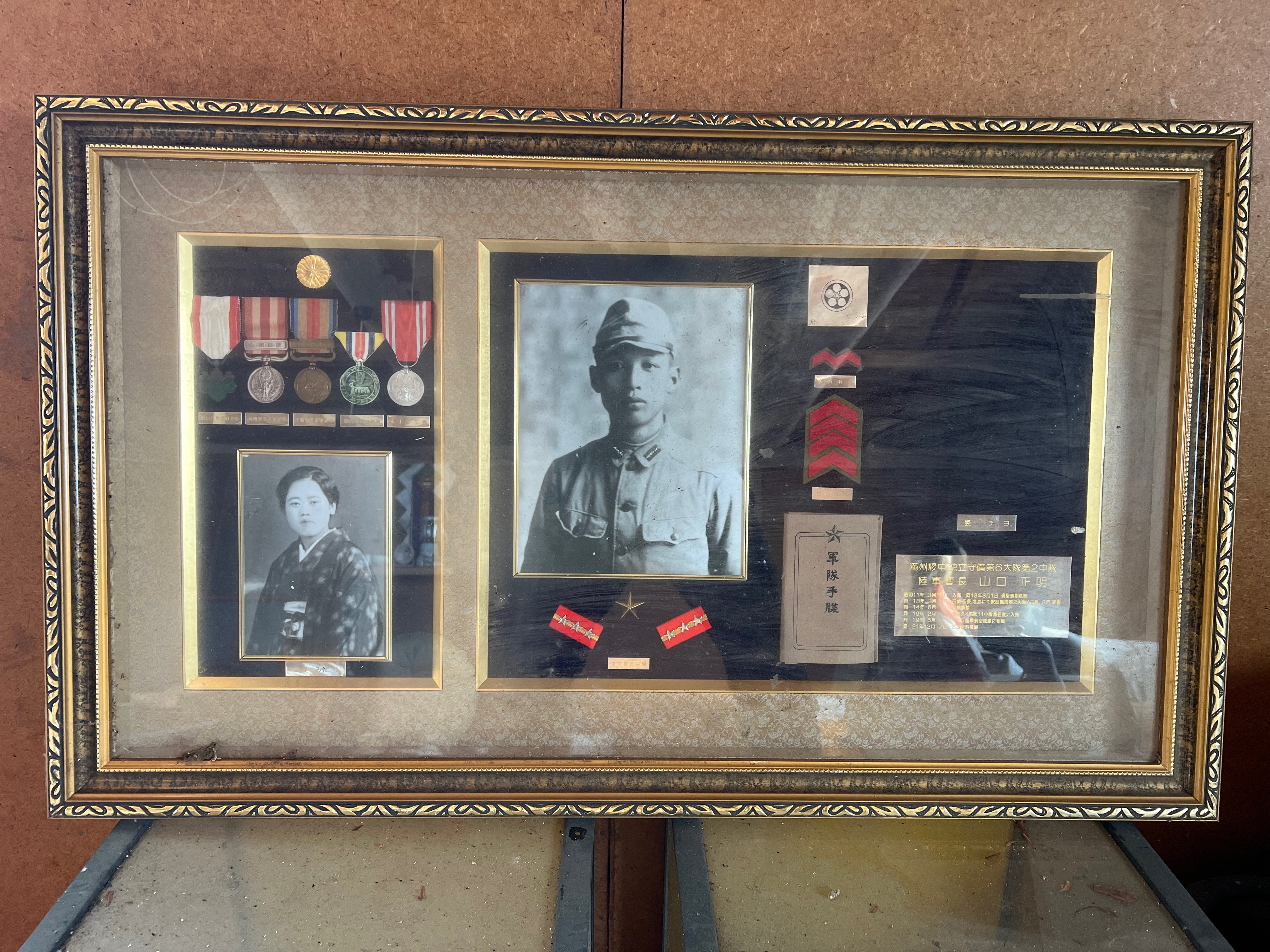
Kura 08 — Military pocketbook. A record of duty in a turbulent era, stored and not forgotten.
A Shared Legacy
Coming Soon
Some of what is here is handwritten — personal records, Shinto scripts, correspondence. Other pieces are printed: publications and rare books from the Meiji and Taisho eras, kept by chance inside these walls.
A system to share this material — manuscripts and books alike — with a wider audience is being developed.
Quietly. Without urgency. The way these things should be done.
— Isurugi, Aizu —